Intro
The walls are what make padel padel. In no other major racket sport can the ball rebound off the enclosure and stay in play — and this single idea creates the sport’s long rallies, its spectacular defensive gets, and most of its beginner confusion.
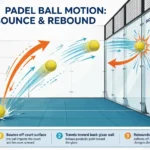
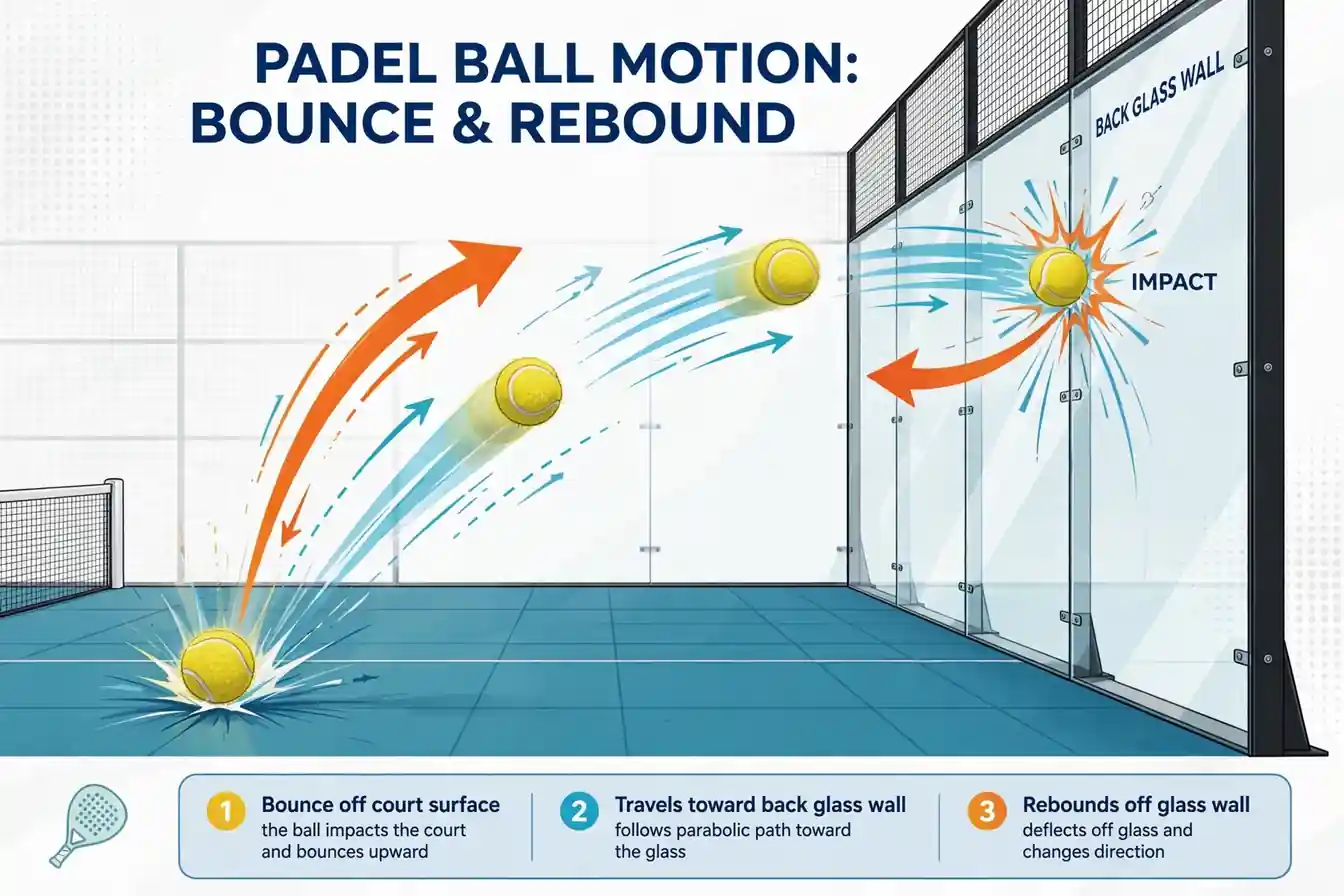
The entire wall game rests on one principle: the ball must bounce on the ground first. Everything else — your own glass, their glass, the fence, the gates, even leaving the court — follows from that sentence. This guide explains every padel wall rule from the official FIP rulebook (2026 edition): when walls are in play, the famous glass-vs-fence difference, using your own walls on purpose, out-of-court play, and the wall faults that end points. It pairs with our padel-rules beginner guide and our padel-faults reference.
The Bounce-First Principle
Memorize this and 90% of wall disputes disappear:
> The ball must always bounce on the ground before it touches any wall or fence.
Two directions, two outcomes:
- Their shot → your side: the ball bounces on your floor, then hits your glass or fence — still in play. Return it before the second bounce.
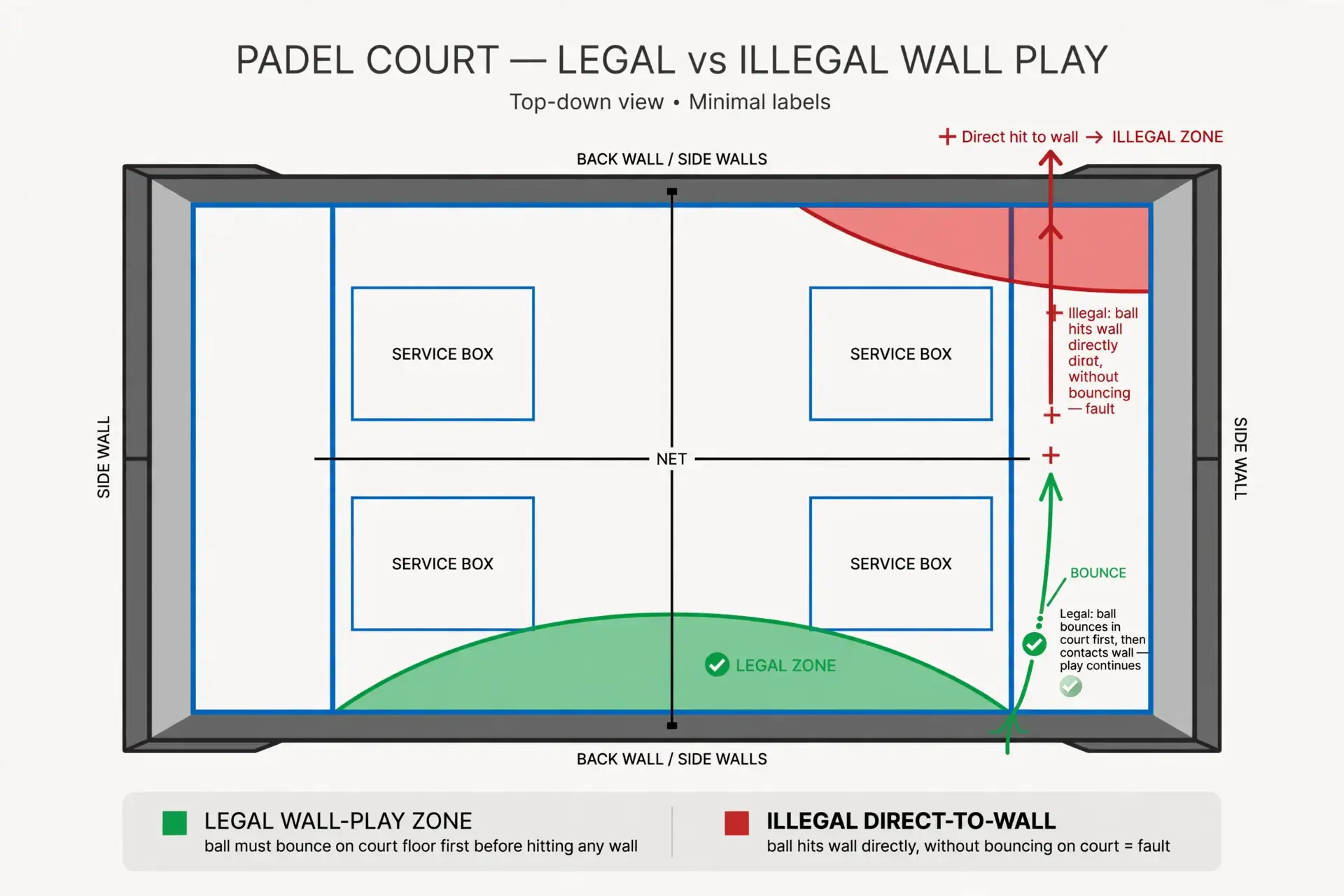
- Your shot → their side: the ball must cross the net and bounce on their floor before touching their glass, fence, or any structure. Hit their wall on the full and you lose the point.
The principle applies to every wall, every fence panel, every gate frame. Bounce first, walls second — always.
Your Own Walls: Defense and Attack
After the bounce, your own walls are your best friends:
- Let it come to you. A deep, difficult ball that bounces and rebounds off your back glass comes back slower, higher, and more predictably than the same ball lunged at on the full. Turn side-on as it returns and play it cleanly. This is the single biggest beginner upgrade in padel.
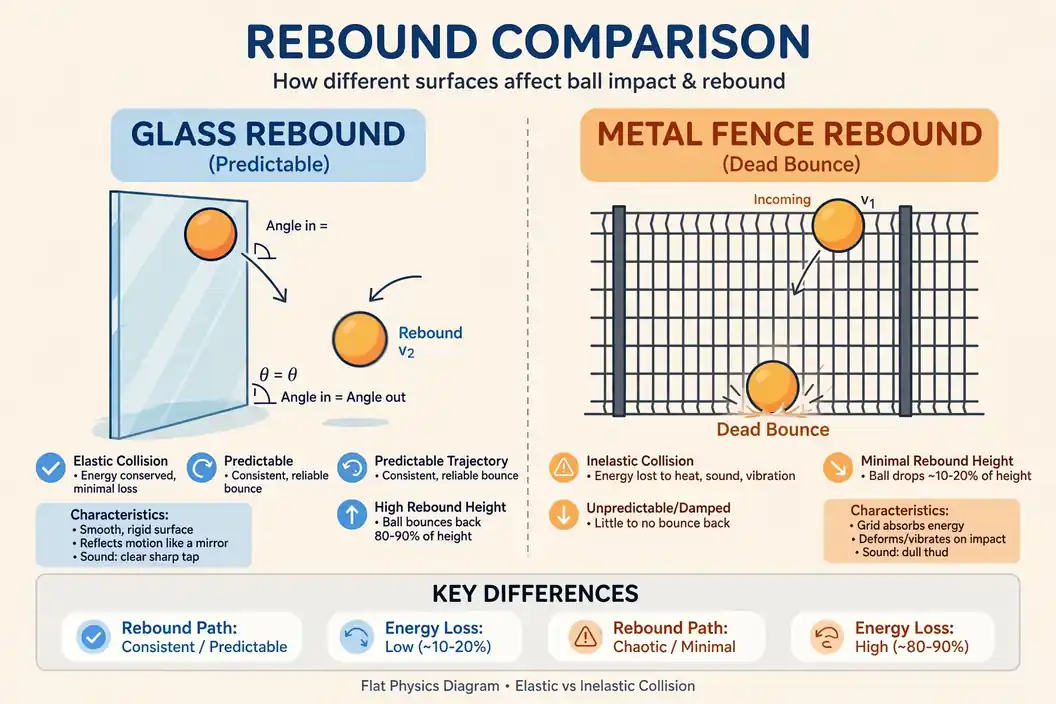
- Glass is predictable; fence is dead. A ball off the smooth glass rebounds true and readable. A ball off the metal mesh loses pace and drops fast — harder to read, harder to attack off. Plan for the difference.
- Play off your own wall on purpose. You may deliberately hit the ball into your own glass first so it rebounds over the net — FIP Rule 14 explicitly allows it. This “contrapared” is an advanced escape when you’re jammed, but it’s fully legal.
- One limit: after your shot, if the ball touches the metal fence or any part of your own side’s ground or structures (other than via the glass-first route into their court), the point is lost. Use glass deliberately; treat the fence as a hazard.
(A note on a common myth: some beginner guides claim you can’t use your own wall to send the ball over. The FIP rulebook says you can — as long as it then bounces in the opponents’ court.)
Their Walls: The Line You Must Not Cross
Your return must bounce in the opponents’ court before touching anything on their side:
- Ball hits their glass or fence before bouncing → point lost.
- Ball hits the net, then drops directly onto their wall or fence without bouncing → point lost (FIP Rule 13.1h).
- Ball bounces in their court, then hits their glass or fence → perfectly fine, play continues. In fact this is routine: hard shots regularly bounce and thump into the back glass.
- Ball bounces in their court and then flies over the walls and out → also fine. Your shot is good the moment it bounces correctly; what happens after is their problem — unless they can run it down outside (see below).
When the Ball Gets Stuck: You Win the Point
Two odd-but-true rules beginners love:
- If your shot bounces in the opponents’ court and then goes through a hole in the metal fence or gets stuck in it, you win the point (FIP Rule 15).
- If it bounces correctly and then gets stuck on the flat top of the wall, you also win the point.
The rulebook genuinely anticipates stuck balls. File it under “padel is delightfully specific.”
The Back-Spin Return: Padel’s Strangest Legal Play
Here is a rule almost no beginner guide covers. Sometimes a ball with heavy backspin bounces in the opponents’ court and then spins back over the net to your side. FIP Rule 14.1(g) says: you may reach over and hit it — the return is valid — as long as neither you, your clothing, nor your racket touches the net, the posts, or the opponents’ court. Touch the net during the reach and the point is lost. It is rare, it is legal, and it wins arguments.
Out-of-Court Play: Leaving the Court Is Legal
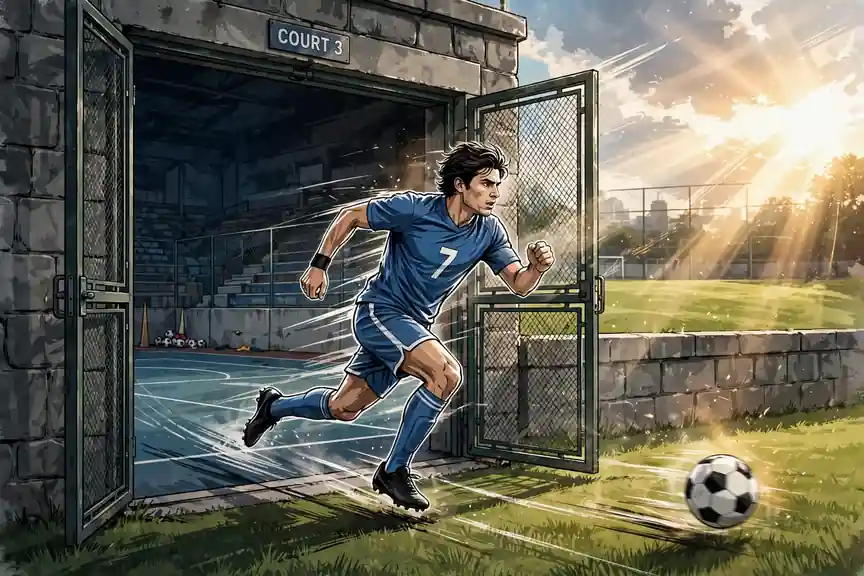
The most spectacular rule in padel: you may run out of the court to play a ball.
- If your opponent’s shot bounces correctly and then exits over the end wall, you may leave through the side gates, chase it down outside, and play it back in.
- This is only allowed where the court has a proper safety area: minimum 3 meters wide (4 recommended) by 4 meters long and 3 meters high on each side, with two access points and no obstacles (FIP 2026; the minimum was raised from 2m to 3m).
- If the ball exits over the side wall or through the door, the point is lost once it bounces a second time or touches anything outside the court — you can’t chase those the same way.
- While outside, the dividing post at the gate is a neutral zone above 0.92m — you may touch or hold it.
- If any part of your body is outside your own court without authorized out-of-court play, you lose the point.
Pros weaponize this with the “por tres” — a smash hit so it bounces and exits over the side, nearly unreturnable. At club level you’ll rarely see it, but knowing the rule exists changes how you watch the pros.
Wall Faults: How Points End at the Walls
You lose the point at the walls when:
- Your shot hits the opponents’ glass, fence, or any structure before bouncing in their court.
- Your shot hits the net and then lands directly on their wall or fence without bouncing.
- Your shot touches the fence, ground, or structures on your own side after you strike it (other than the legal own-glass route).
- The ball leaves the court over the walls where out-of-court play is not authorized (no safety zone) — e.g., straight over the top with nowhere legal to chase it.
- On the serve specifically: the ball bounces in the box then touches the metal fence before the second bounce — a serve fault (see our padel-serve-rules guide).
And remember the rally rule that underpins everything: two bounces on your side, at any point, ends it — walls or no walls.
Why Does This Rule Exist?
The walls exist because of a garden that was too small. In 1969, Enrique Corcuera wanted a tennis court at his Acapulco home but lacked the space, so he built a compact 20×10m court and enclosed it with 3-meter walls to stop balls flying into the garden. The pragmatic fix became the sport’s soul: his wife Viviana’s first rules made the walls part of the game, and suddenly defense was possible from anywhere.
Every wall rule since has protected that original idea. The bounce-first principle stops players from treating the glass like a squash wall (which would make the net irrelevant). The glass/fence distinction preserves fair, readable bounces. Out-of-court play rewards athleticism without breaking the enclosure’s logic. Padel’s walls aren’t decoration — they’re the reason rallies last.
What-If Scenarios
What if their shot hits my glass before bouncing on my side? Their fault — the point is yours. The ball must bounce on your floor before touching your walls.
What if I deliberately play my shot off my own back glass and it lands in their court? Legal and clever. FIP Rule 14 allows using your own wall first.
What if my smash bounces in their court and flies over the back wall? Your point — unless they chase it down outside through the gates on a court with a proper safety zone.
What if the ball bounces in their court and wedges into the fence mesh? You win the point. The rulebook covers exactly this.
What if I run out through the gate but the ball had gone over the side wall? Too late — once it bounces a second time or touches anything outside, the point is lost. Only balls over the end wall are chasable.
What if the ball comes back over the net to my side on its own? Reach over and hit it — legal, as long as you don’t touch the net, posts, or their court.
What if my shot hits the ceiling or lights after bouncing correctly on their side? Still a correct return (FIP Rule 14.1d) — their problem now.
Case Studies: Walls in Real Matches
1. The wall masters — Tapia and Coello, Riyadh P1 2026. The world No. 1s’ 6-4, 6-2 final win over Galán and Chingotto in February 2026 was a clinic in controlled aggression, but what defines this pair across their 30 meetings is wall mastery: reading rebounds off the back glass to stay in rallies that would be over in any other sport. Their 32nd title together was built on the principle this article teaches — let the ball come off the glass, then punish it.
2. The comeback built on defense — Sánchez and Ustero, Riyadh P1 2026. Down a set to the world No. 1s Triay and Brea, the new pair’s 3-6, 6-1, 6-4 comeback was fueled by exactly the defensive wall play beginners should copy: absorbing pressure, using the glass to stay alive, and turning defense into attack. Ustero became the youngest P1 winner ever playing this way.
3. The rule that keeps evolving — the 2026 safety zone. The FIP raised the minimum out-of-court safety zone from 2m to 3m for 2026, precisely because pros kept pushing the physical limits of out-of-court play. The walls giveth rallies — and the rulebook keeps adjusting the arena.
FAQ
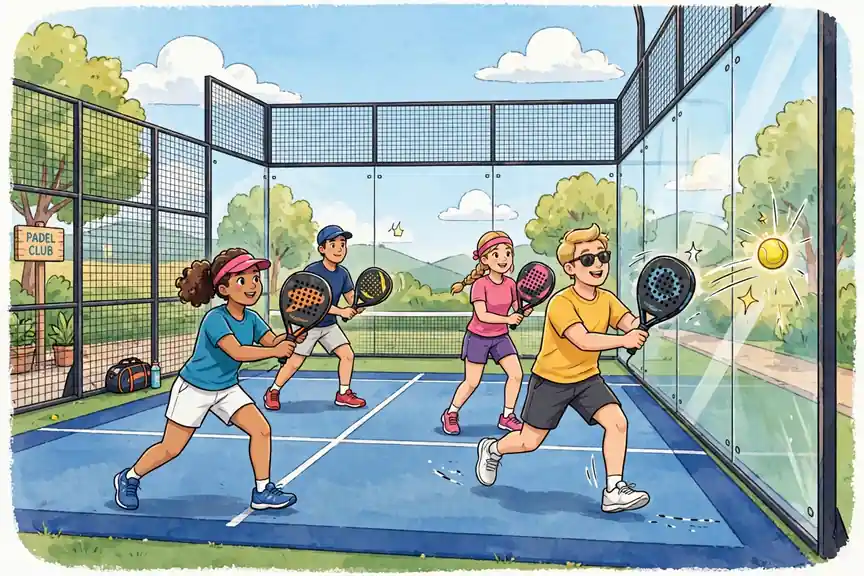
1. Can you hit the ball off the wall in padel? Yes — but only after it has bounced on the ground first. After the bounce, your own glass and fence are in play.
2. What happens if the ball hits the wall before bouncing? The point is lost. The bounce must always come before any wall or fence contact.
3. Can I use my own wall to hit the ball over the net? Yes. Deliberately playing off your own glass first is legal, as long as the ball then bounces in the opponents’ court.
4. What’s the difference between the glass and the fence? Same rules, different bounces: glass rebounds predictably, mesh kills the pace. On the serve specifically, glass after the bounce is fine but fence is a fault.
5. Can you go outside the court in padel? Yes — through the side gates to retrieve a ball that exited over the end wall, but only on courts with a proper safety zone (min 3m × 4m × 3m per side).
6. What if the ball gets stuck in the fence? If it bounced in the opponents’ court first, you win the point — the FIP rules specifically cover this.
7. What is “por tres”? A pro smash hit so it bounces and exits over the side fence — nearly unreturnable and a signature padel weapon.
8. Can I reach over the net to hit a ball that spins back? Yes — legal under FIP Rule 14, as long as you don’t touch the net, posts, or the opponents’ court.
Key Takeaways
- Bounce first, walls second — the one principle behind every wall rule.
- Your own glass is predictable; the fence is dead — and on the serve, fence contact is a fault.
- You can play deliberately off your own wall to get the ball over.
- Their walls before the bounce = point lost; after the bounce = play on.
- A ball stuck in the fence or on the wall after a correct bounce wins you the point.
- Out-of-court play is legal through the gates where a proper safety zone exists.
- The walls exist because of a small garden in Acapulco — and they turned a space problem into a sport.
Keep Reading
Keep Reading
- Padel Faults, Lets, and When the Ball Is Out
- Padel Court Dimensions (20m x 10m) Explained
- How to Play Padel: Complete Beginner Guide