Intro
Padel looks like tennis in a glass box — and that is almost right, but the rules that make it different are exactly the ones beginners get wrong. This guide covers the court, the underhand serve, scoring (including the golden point), wall play, and every way to win or lose a point.
Padel is played as doubles — two against two — on an enclosed court: hit the ball over the net so it bounces in the opponents’ court and they cannot return it. Matches are the best of three sets. It pairs with our padel-scoring guide, our padel-serve-rules deep dive, and our guide to padel-wall-rules.
The Court, From Every Angle
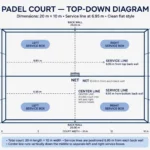
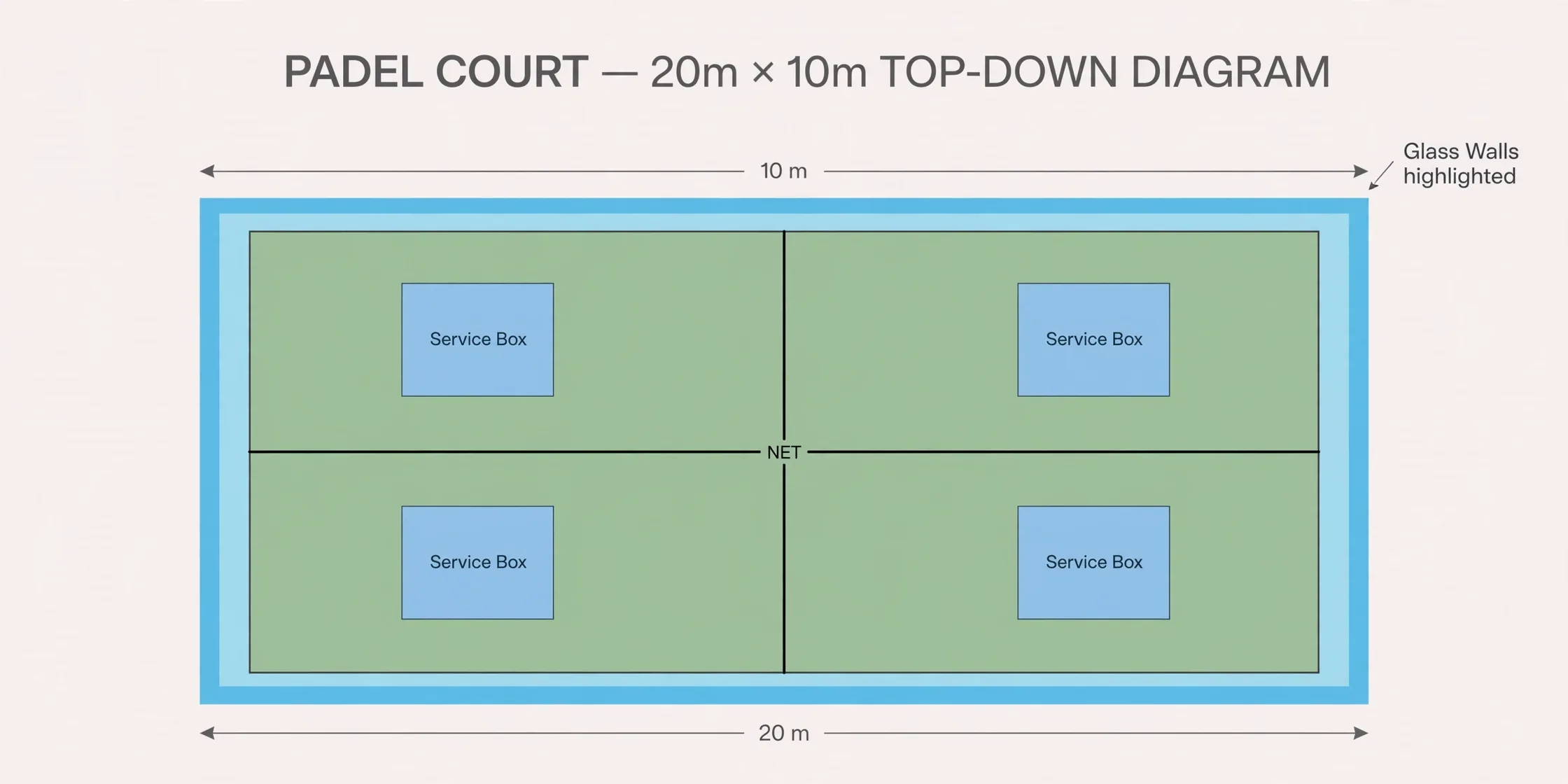
Every padel court follows the same official dimensions (from the International Padel Federation, the FIP):
- 20 meters long by 10 meters wide (measured inside), split in half by the net.
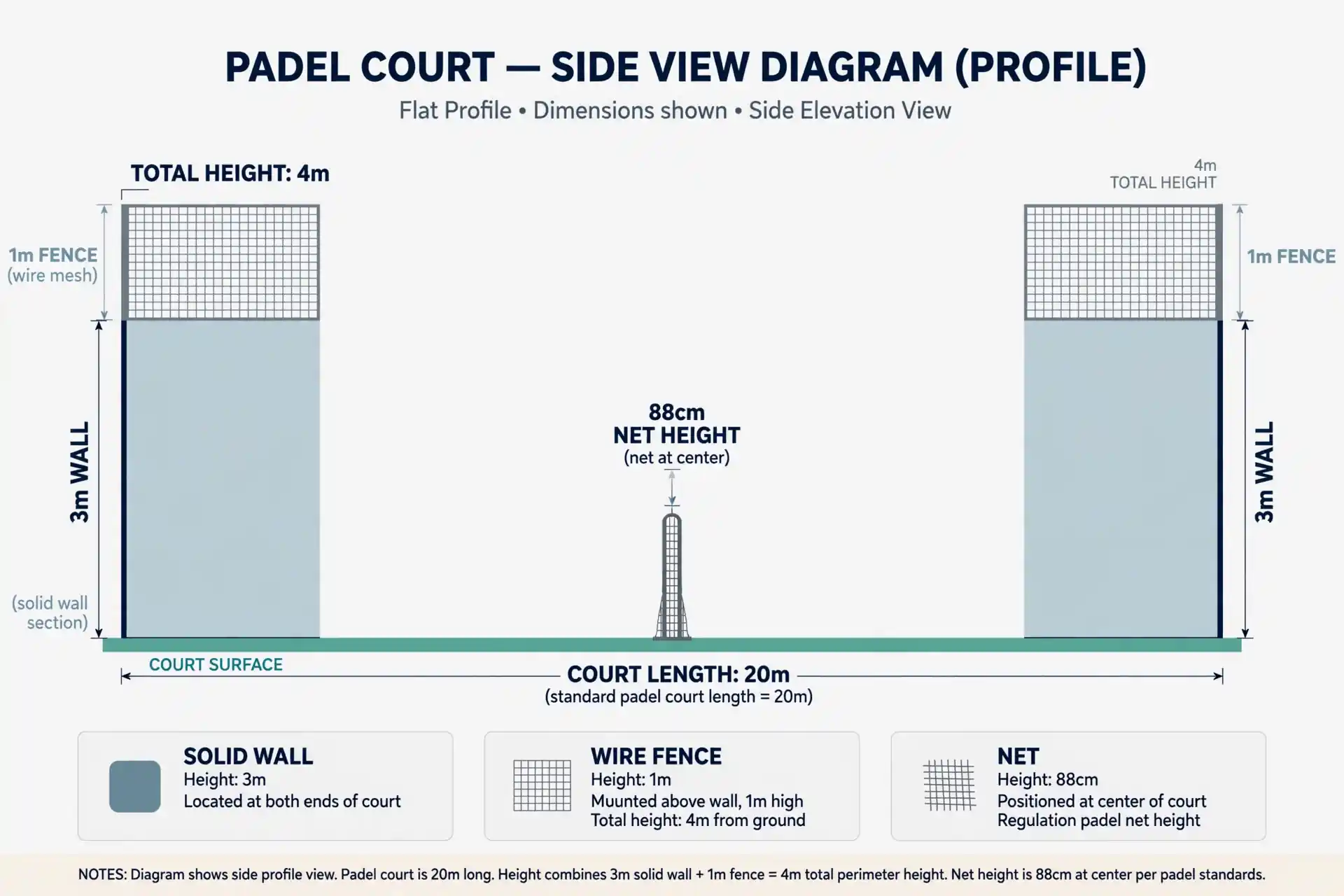
- Net: 0.88 meters high at the center, 0.92 meters at the ends (about knee height — much lower than a tennis net).
- Service lines sit 6.95 meters from the net on each side. The space between the net and the service line, split by a center service line, forms the four service boxes.
- End walls: 4 meters total — 3 meters of wall (glass or solid) topped by 1 meter of metal fence.
- Side walls: two approved designs exist (stepped walls or full glass panels), with metal fence filling the rest of the enclosure.
- All court lines are 5 cm wide, and the minimum ceiling height above the court is 6 meters.
The Serve: Five Things It Must Be
The padel serve is the rule beginners get wrong most often. A legal serve must be all five of these:
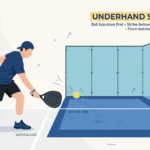
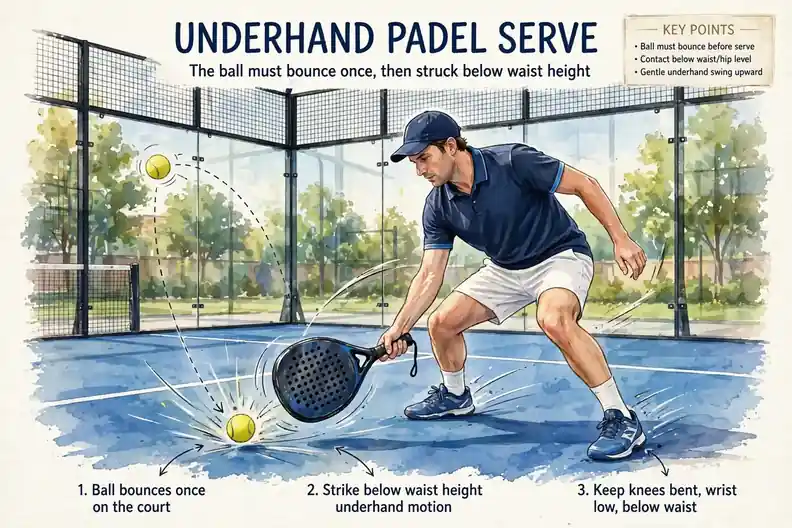
- Underhand, after a bounce. You drop the ball, let it bounce on the ground, then hit it. You may never throw it up and hit it from the air.
- At or below waist height. The ball must be struck at or below your waist.
- With a foot on the ground. At least one foot must be touching the ground when you strike it.
- From behind the line. One foot must start behind the service line, you may not step on the line, and your feet must stay there until the ball is struck.
- Diagonal, into the correct box. The first serve of each game goes from the right side diagonally into the receiver’s left box; then alternate. The serve must bounce inside the box (lines count as good).
You get two serves per point, like tennis. And the receiver must let the serve bounce before returning it — volleying a serve is illegal and the point goes to the server.
Serve faults (one fault = second serve; two = lose the point)
- Striking above the waist or without a bounce.
- Stepping on the service line or touching the imaginary center line.
- The ball landing outside the receiver’s box.
- The ball hitting you, your partner, or anything you carry.
- The ball bouncing in the box and then touching the metal fence before its second bounce.
- The ball bouncing in the box and flying straight out through the court gates.
A serve that clips the net and still lands in the correct box is a “net” — it is replayed with no penalty.
Scoring: Tennis Scoring With a Twist
Padel uses tennis-style scoring: 15, 30, 40, game. A set goes to the first pair to win 6 games, with a 2-game lead. At 6-6, a tie-break is played — first to 7 points, win by 2, switching ends every 6 points. Matches are best of three sets, and players change sides after the 1st, 3rd, and every following odd game.
The golden point (punto de oro)
Here is the twist. When a game reaches 40-40 (deuce), most professional and competitive padel does not play advantage. Instead, a single sudden-death point — the golden point — decides the game:
- One point is played at 40-40, and whoever wins it wins the game.
- The receiving pair chooses the side — a small but real tactical edge.
- In mixed matches, the receiver must be the same sex as the server.
Why does it exist? Long deuce games were dragging matches out. The World Padel Tour introduced the golden point in 2020 to shorten matches (by roughly 10–15%), the FIP adopted it afterward, and Premier Padel uses it as standard.
One honest note: the FIP rules recognize three deuce formats — classic advantage, the golden point, and (new for 2026) the star point, a hybrid where the first two deuces play advantage and a third deuce becomes sudden death. Check which format your club or tournament uses before the first serve.
The Walls: Padel’s Defining Rule
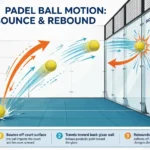
This is what makes padel padel. After the ball bounces on your side, the walls and fence become part of the court:
- Off your own glass is fine. The ball may bounce, hit your back or side wall, and you can still return it before it bounces a second time.
- Off your own wall into their court is a correct return. You may deliberately play the ball off your own wall first, as long as it then bounces in the opponents’ court.
- Off their walls first is OUT. Your return must cross the net and land in the opponents’ court before touching any wall or fence. Hitting their glass or fence first loses the point.
- On the serve, walls are stricter: if the serve bounces in the box and then touches the metal fence before the second bounce, it is a fault.
- If the ball bounces in the opponents’ court and then goes out through the gates, out-of-court play is allowed (where courts have the required safety space): a player may leave the court and play the ball back in.
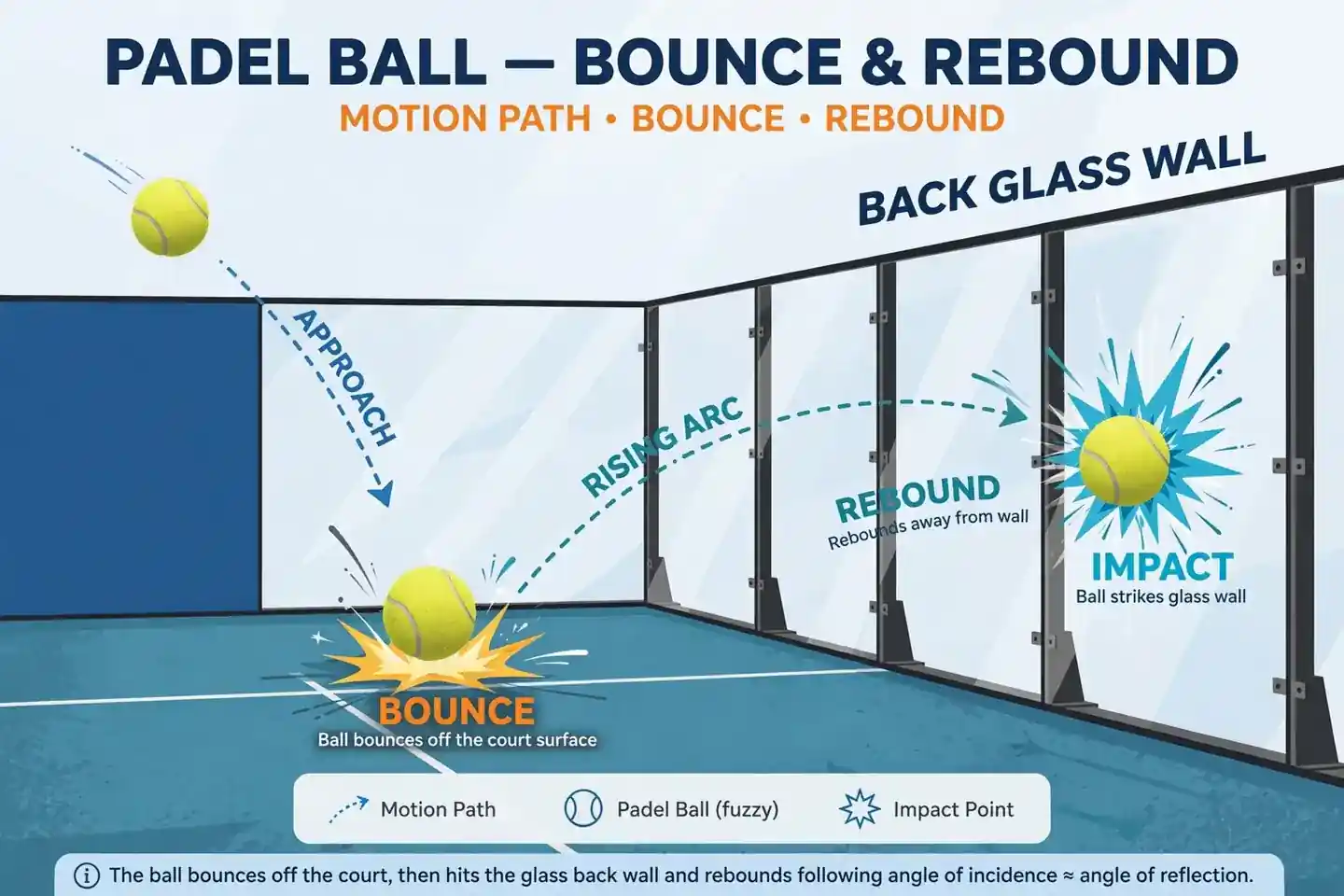
The golden beginner habit: do not panic at deep balls. Let a difficult shot ride the back glass, then play it on the way back in.
Faults, Lets, and How Points Are Won and Lost
You lose the point if:
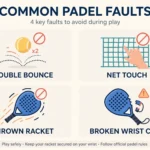
- The ball bounces twice on your side before you return it.
- You, your racket, or your clothing touches the net or posts while the ball is in play.
- You volley the serve (the receiver must let it bounce).
- You hit the ball twice, or the ball touches your body or clothing after your opponent hits it.
- You hit the ball before it crosses the net to your side.
- Your return hits the opponents’ walls or fence before bouncing in their court.
- You throw your racket at the ball or jump over the net.
- Your wrist cord breaks or you drop your racket — the point is lost immediately (the cord is mandatory for a reason).
- You serve two consecutive faults.
Odd but true: if your shot bounces in the opponents’ court and then gets stuck in the fence mesh or wedged on top of the wall, you win the point — the FIP rules specifically cover this.
A let (replay the point) is called if: the ball splits during play, something from outside interrupts the point, or the serve clips the net and lands in. Between points you have 20 seconds max, 90 seconds at changeovers.
Why Does This Rule Exist?
Padel was invented in 1969 in Acapulco, Mexico, by businessman Enrique Corcuera. He wanted a tennis court at his Las Brisas home but did not have enough space — so he built a smaller 20 × 10 meter court, enclosed it with 3-meter walls to keep the ball in, and made the walls part of the game: a ball that bounced could rebound off a wall and stay in play. His wife Viviana wrote the first set of rules — reportedly as a birthday gift — basing the scoring on tennis so tennis players would feel at home.
The sport reached Spain in 1974 (Prince Alfonso of Hohenlohe built courts at the Marbella Club), then exploded in Argentina. The first national association was founded in 1988, the International Padel Federation (FIP) in 1991, and the first World Padel Championship was held in 1992.
Two design choices explain the rules you just learned. The underhand serve keeps rallies alive from the first shot. And the walls turned a small-space problem into the sport’s soul: points last longer, defense is possible from anywhere, and teamwork beats raw power. The golden point, added in 2020, is the newest chapter of the same idea.
What-If Scenarios
What if the ball hits the net cord and drops in on my serve? It is a “net” — replay the serve, no penalty.
What if my return hits the side glass before bouncing in their court? You lose the point. The ball must bounce in the opponents’ court before touching any wall or fence on their side.
What if the ball bounces on my side, hits my back glass, and I return it? Legal and smart — this is textbook padel defense.
What if I smash the ball and it bounces in their court, then flies over the back wall? Your point, as long as it bounced first. If the court allows out-of-court play, they may still run out and return it.
What if my racket’s wrist cord snaps mid-rally? You lose the point immediately — and the cord is mandatory precisely so rackets do not fly.
What if it is 40-40 and I do not know which format applies? Ask before the match starts. Golden point, star point, and classic advantage all exist in 2026 play — do not assume.
Case Studies: The Rules in Real Matches
1. A final that showed every rule at once — Barcelona Premier Padel Finals, December 2025. World No. 1s Agustín Tapia and Arturo Coello faced No. 2s Alejandro Galán and Federico Chingotto in their 14th final of the season — their 29th head-to-head meeting — before a sold-out Palau Sant Jordi crowd of more than 15,200. The match was a rules textbook in motion: Galán hit 22 winners in the first-set tie-break to take it 7-6; Coello answered with 9 winners from 10 smash attempts in the second, converting on his ninth break-point opportunity; the third went to another tie-break after a break-back at 5-4, where Tapia hit four winners to seal it 6-7, 6-3, 7-6 in 2 hours 53 minutes — with Chingalán saving four match points. Sets to six, tie-breaks at 6-6, best of three: every scoring rule you just learned, deciding the biggest final of the year.
2. The rule change that shortened every deuce — the golden point, 2020. The World Padel Tour introduced the punto de oro in 2020: no more advantage, one sudden-death point at 40-40. The FIP adopted it shortly after, and it is now standard across Premier Padel, cutting matches by roughly 10–15%. In January 2026, the FIP added the star point as a third recognized option — proof that padel’s rulebook is still evolving.
FAQ
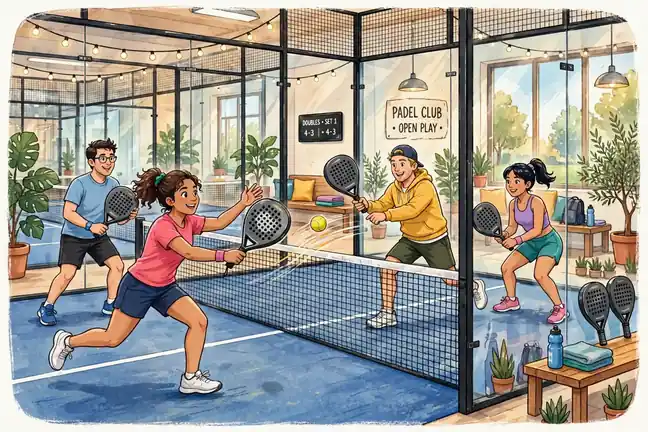
1. Is padel always played as doubles? Official competition is doubles (2 vs 2). Singles courts exist for lessons, training, or casual play.
2. Can the serve be overhand like in tennis? No. The serve is underhand — drop the ball, let it bounce, and strike it at or below waist height.
3. Can I volley the serve? No. The receiver must let the serve bounce first, or the point goes to the server.
4. What is the golden point? A sudden-death point at 40-40 instead of advantage. Whoever wins it wins the game; the receiving pair chooses which side to receive from.
5. Can the ball hit the walls? After it bounces, yes — your own walls and fence stay in play. Your shot must bounce in the opponents’ court before touching their walls.
6. How is a set won? First pair to 6 games with a 2-game lead; at 6-6 a tie-break (first to 7, win by 2) decides it. Matches are best of three.
7. What happens if the ball gets stuck in the fence? If it bounced in the opponents’ court first, you win the point. The FIP rules specifically cover this.
8. Do I have to wear the wrist cord? Yes, it is mandatory — if it breaks or your racket drops mid-point, you lose the point.
Key Takeaways
- Padel is doubles on a 20 × 10 m enclosed court — glass and fence are part of the game after the bounce.
- The serve is underhand, bounced, below the waist, diagonal — and the receiver must let it bounce.
- Scoring is tennis-style (15-30-40), sets to 6, tie-break at 6-6, best of three sets.
- At 40-40, the golden point usually decides the game — one point, receivers choose the side (confirm your tournament’s format first).
- The ball must bounce before touching any wall; your own walls keep rallies alive.
- Padel’s rules exist for one reason: longer rallies, fairer points, and teamwork beating raw power.
Keep Reading
- Padel Scoring Explained: Tennis Scoring and the Golden Point
- Padel Serve Rules: Underhand, Bounce First, Diagonal
- Playing Off the Glass Walls: Padel Wall Rules
- Padel Court Dimensions (20m x 10m) Explained
- How to Play Padel: Complete Beginner Guide