Intro
Padel is a doubles sport — not “often” doubles, not “usually” doubles, but doubles by design and by rule. The court geometry, the serve rules, the receiving order, even the tactics all assume four players. If you come from tennis singles, padel doubles will feel like a different game wearing a familiar outfit.
This guide covers the complete padel doubles format from the official FIP rulebook (2026 edition): how serving and receiving order works, when you change sides, how sets and tie-breaks run, the three deuce formats (including the 2026 star point), mixed doubles specifics, and coaching rules. It pairs with our padel-rules beginner guide, our padel-scoring guide, and our how-to-play-padel walkthrough.
Why Doubles Only?
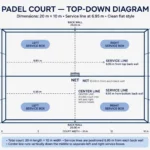
Official padel is always 2 vs 2. The reasons are structural: the 20×10m court with playable walls is geometrically tuned for four players — two can cover the width, one can guard the net while the other covers the glass, and the wall rebounds arrive at readable angles for a pair. Singles exists as a casual variant on modified courts, but every official competition, from club leagues to Premier Padel, is doubles.
The Toss and the First Decisions
Before the first ball (FIP Rule 4), a coin toss decides:
- The winning pair chooses to serve or receive first, or which side to start on (the losers take the other choice), or they can ask the opponents to choose first.
- Then each pair tells the umpire who serves first and who receives first.
These small choices matter: serving first is a mild edge, and picking the sunny side (outdoors) or preferred ends can shape the first set.
Serving Order: Fixed for the Set
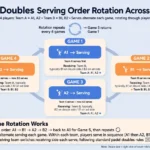
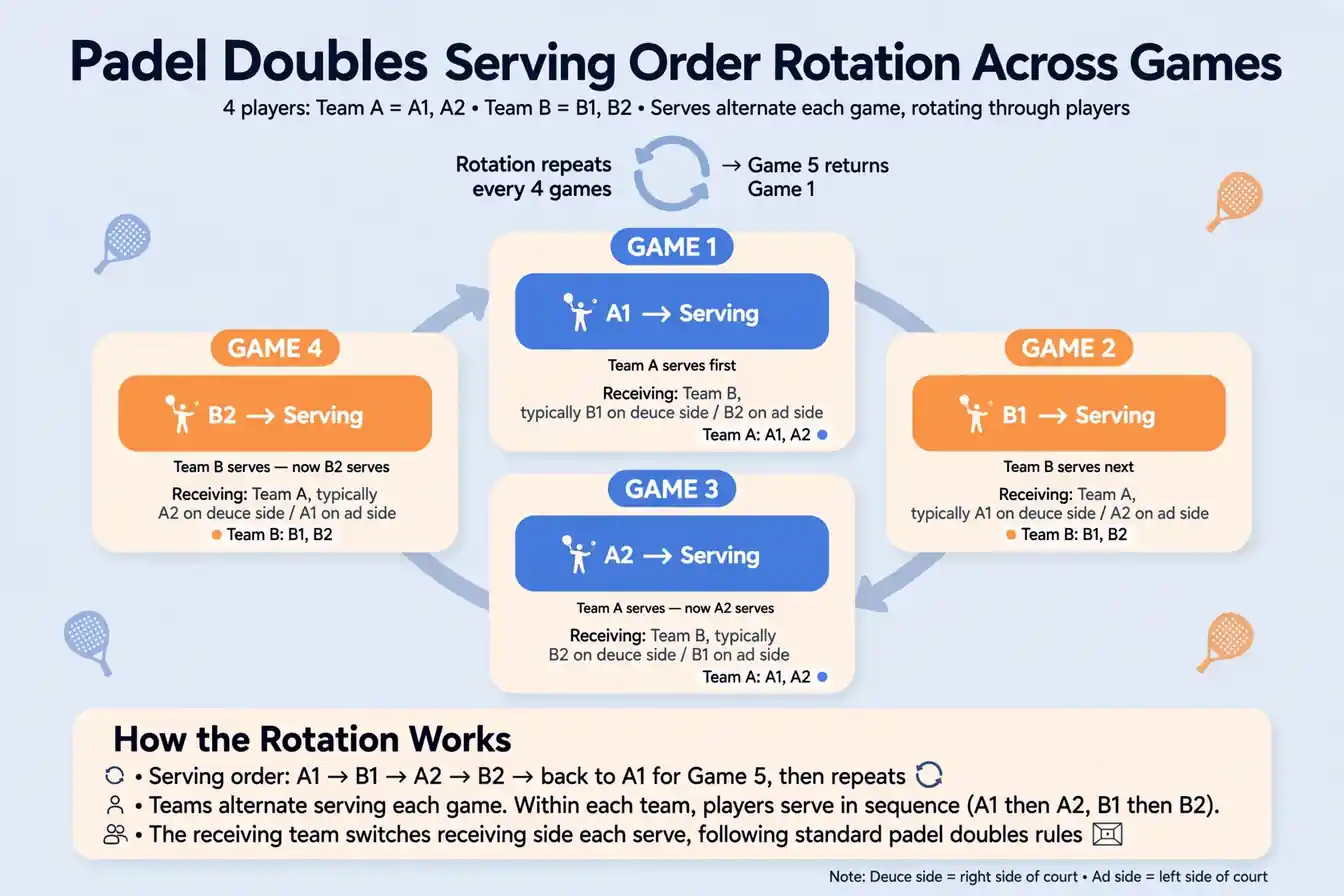
Padel’s rotation is simpler than it looks (FIP Rule 6.8–6.9):
- One player serves the entire game. Then the serve passes to the other pair.
- Partners alternate each time it’s their pair’s turn to serve: A1, then B1, then A2, then B2, and so on.
- The order is decided before the set and frozen — it cannot change until the next set, including through the tie-break.
- If someone serves out of turn and it’s caught: the correct server takes over immediately, all points already played stand, and a single outstanding serve fault is wiped.
Practical tip: put your steadier server first in the set — the opening game sets the tone, and a confident hold early is worth more than raw serving talent late.
Receiving Order: Also Fixed
The mirror rule (FIP Rule 8.2–8.4):
- In the first game of each set, the receiving pair decides who receives first — that player then receives the first serve of every game in the set.
- Partners alternate receiving across games, and the order is frozen for the set and tie-break.
- If the pair messes up the order mid-game, they continue wrong until that game (or tie-break) ends, then revert to the original order for the next game.
This is the rule club players violate most — decide your receiving order before the set starts and say it out loud.
Changing Sides
- Change ends after the 1st, 3rd, and every subsequent odd game in the set.
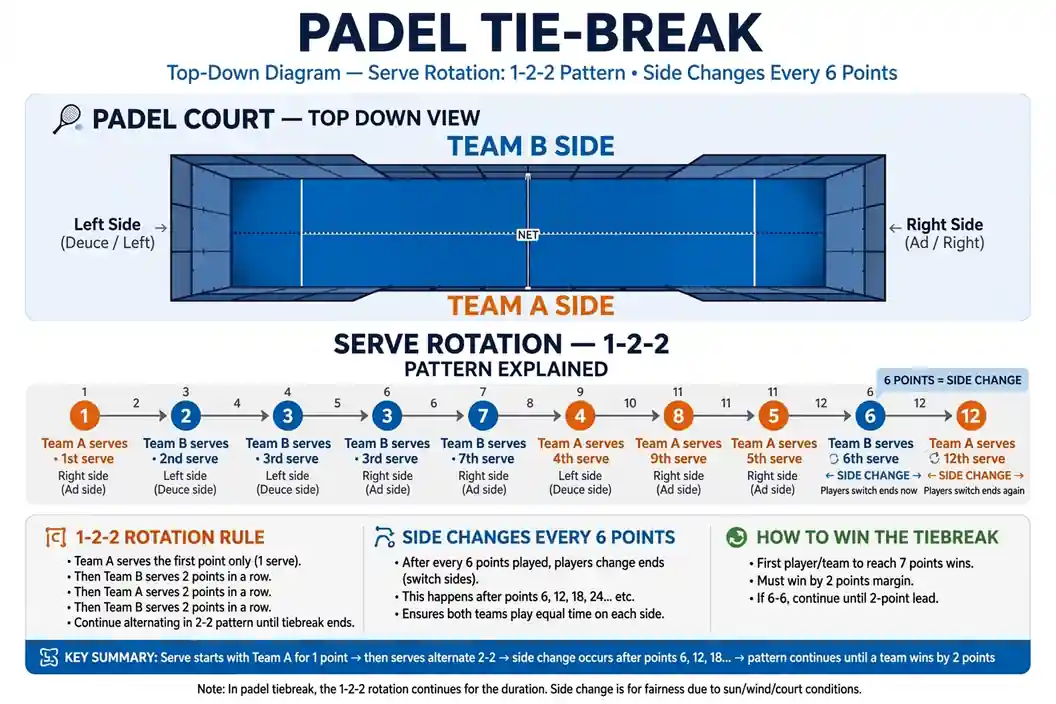
- In a tie-break, change ends every 6 points.
- If you forget: fix it when noticed, keep the correct order going forward, and all points already played stand — even if discovered after a faulty first serve (the server just loses that serve).
Sets, Tie-Breaks, and Match Format
Sets (FIP Rule 1): first pair to 6 games, winning by 2. At 5–5 you keep playing (7–5 is a valid set score); at 6–6 you play a tie-break.
Tie-break: first to 7 points, win by 2, counted 1, 2, 3… The player whose turn it is to serve takes the first point from the right side only; after that, players serve two points each in the established order, and ends change every 6 points. The tie-break counts as a 7–6 set, and the pair that did not start serving in the tie-break serves first in the next set.
Match: best of three sets — first to two sets wins. If pre-announced, the third set may be replaced by a tie-break to 7 or a super tie-break to 10 (both win by 2). Some social formats use short sets (first to 4) — always confirm before the first serve.
How long does it take? Club best-of-three: roughly 60–90 minutes. Pro matches: 75–120 minutes, with tight three-setters running longer.
Deuce: Three Formats (Know Which One You’re Playing)
The FIP recognizes three ways to play 40–40 — this is the most important format check in modern padel:
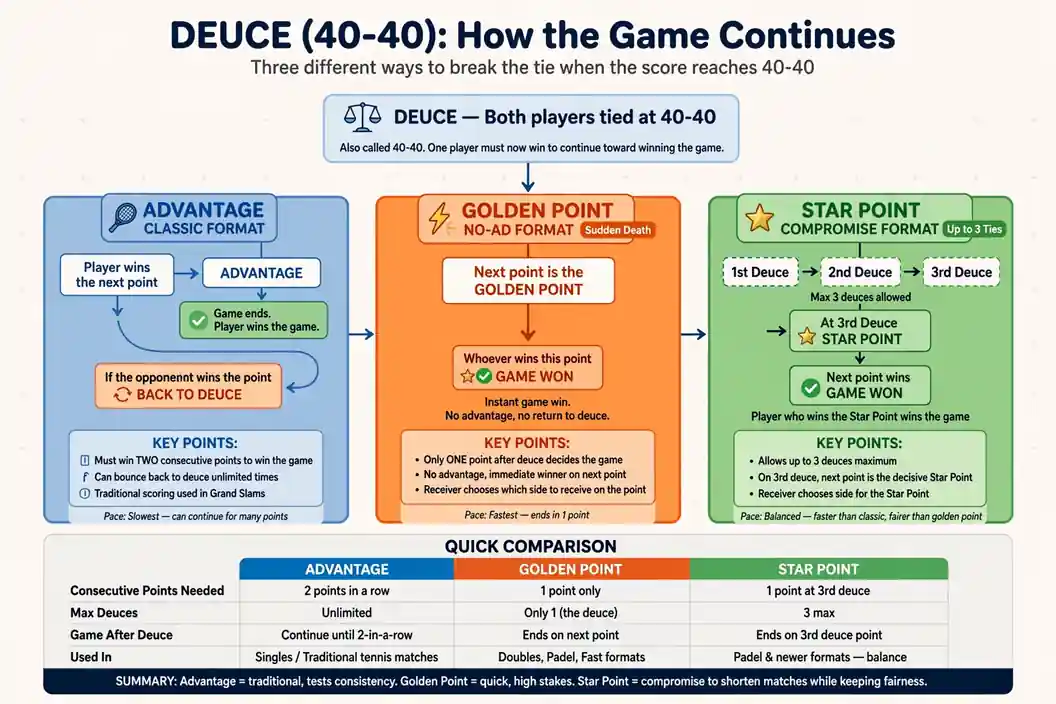
- Advantage (traditional): win two points in a row from deuce, cycling back to deuce until someone does.
- Golden point: one sudden-death point immediately at 40–40. Common in social and club play; was the pro standard from 2020–2025.
- Star point (2026 pro standard): play advantage normally, but only twice. If the score returns to deuce a third time, a single deciding star point is played. The receiving pair chooses the side (without switching positions), and in mixed matches the receiver must be the same sex as the server. Introduced by the FIP in November 2025, debuted on the pro tours at Riyadh P1 2026.
Ask your organizer which format applies before the match. Assuming wrong at 40–40 is the classic club argument.
Mixed Doubles Specifics
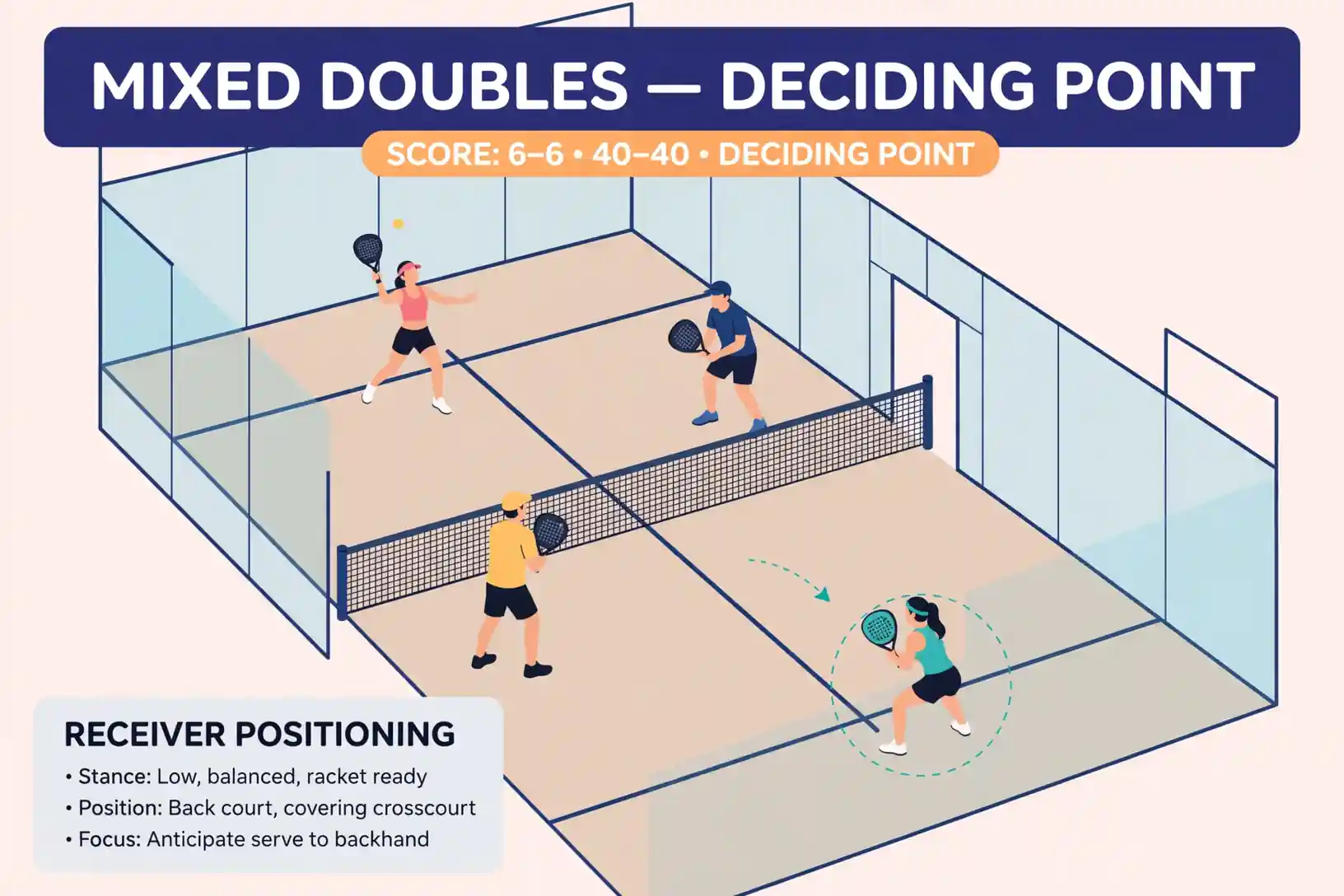
- On any deciding point (golden or star), the receiver must be the same sex as the server, and the receiving pair may not swap positions for that point.
- Otherwise, mixed follows all standard doubles rules — positioning and tactics are up to the pair.
The Two Roles: Drive and Revés
Not a rule, but every doubles pair lives by it. The right-side player (“drive”) typically covers more forehands and sets up points; the left-side player (“revés”) — usually the stronger overhead hitter — finishes them with smashes and bandejas. Most pairs keep these sides all match because the patterns (cross-court rallies, poaching) are built around them. When choosing who serves first, factor in who plays which side.
Coaching Rules
Coaching is allowed — but only under control (FIP conduct norms):
- Accredited coaches may advise during rest times (changeovers, set breaks).
- During medical timeouts, suspensions, or bathroom breaks, the umpire decides whether coaching is permitted.
- Coach violations count toward the pair’s penalty total — a second offense gets the coach expelled from the match.
Why Doubles?
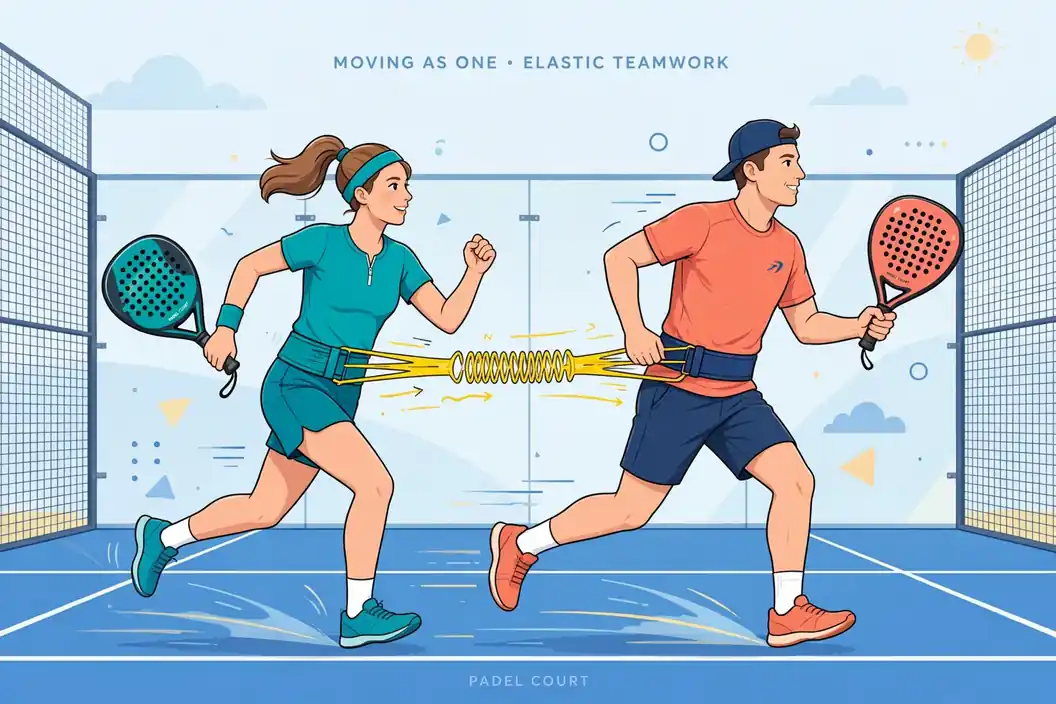
The doubles format exists because padel’s inventors discovered something: four players make the walls sing. With two per side, there’s always someone at the net and someone at the glass, rallies stretch into double digits, and the sport becomes social by construction. The fixed serving and receiving orders exist for the same reason tennis has them — fairness across a whole set — while the side-change rules keep sun, wind, and wear even. Padel didn’t become the world’s fastest-growing racket sport despite being doubles-only; it grew because the doubles format makes every match a partnership.
What-If Scenarios
What if our opponents served out of turn and we only noticed after the game? The game stands as played, and the correct order resumes from the next game. Points are never replayed for order errors.
What if we forgot to change sides at 3–2? Change as soon as anyone notices. Everything already played counts.
What if the tie-break reaches 6–6? Keep playing — first to lead by two points wins it (8–6, 9–7, etc.).
What if we agreed to a super tie-break third set but forgot to announce it? Then it wasn’t agreed — the default is a full third set. Formats must be established before the match.
What if my partner and I want to swap sides (drive/revés) mid-set? Sides are tactical, not regulated — swap freely. Only the serving and receiving orders are frozen.
What if it’s 40–40 and we never agreed on a deuce format? Stop and agree now — don’t play the point first and argue after.
Case Studies: Doubles Format in Real Matches
1. Two tie-breaks, one champion — Barcelona Premier Padel Finals, December 2025. The men’s final between Tapia/Coello and Galán/Chingotto — their 14th final of the season and 29th meeting — went 6-7, 6-3, 7-6 in 2 hours 53 minutes before 15,200 fans. Two tie-breaks in three sets: a textbook display of the 7-point, win-by-2 format deciding the biggest match of the year, with four match points saved along the way.
2. The efficient defense — Riyadh P1 2026, men’s final. The same pairs met again two months later; this time Coello and Tapia won 6-4, 6-2 in 65 minutes — their 32nd title together and Coello’s 21st win in 30 meetings. Same format, wildly different match: proof that best-of-three doubles rewards whichever pair masters the rhythm of holds, breaks, and side changes.
3. The star point era begins — Riyadh P1 2026. The season opener was the first pro event played under the star point system — two advantage cycles, then sudden death. Every 40–40 in Riyadh carried the new tension the FIP designed: long enough for drama, short enough for broadcast. If you watched deuce games feel different this season, that’s why.
FAQ
1. Is padel always doubles? In all official competition, yes — 2 vs 2. Singles is only a casual variant.
2. How does serving order work in padel doubles? One player serves a whole game, then it rotates to the other pair; partners alternate each time. The order is fixed for the set.
3. Can we change our serving order mid-set? No — it’s frozen until the next set. If you serve out of turn, the correct server takes over and played points stand.
4. When do we change sides? After the 1st, 3rd, and every odd game; every 6 points in a tie-break.
5. How does a padel tie-break work? First to 7 points, win by 2. First point served singly from the right, then two serves each in rotation. Ends change every 6 points.
6. What is the star point? The 2026 pro deuce format: up to two advantage cycles, then one deciding point (receivers choose the side). It replaced the golden point on the pro tours.
7. How long is a padel match? Best of three sets: about 60–90 minutes at club level, 75–120+ at pro level.
8. Can coaches talk to players during a match? Yes, but only during rest times and only accredited coaches — and their violations count against the pair.
Key Takeaways
- Padel is doubles by design — orders, tactics, and geometry all assume four players.
- Serving and receiving orders are fixed per set — decide them before the first game.
- Change sides after odd games (every 6 points in tie-breaks); errors are corrected, never replayed.
- Sets to 6 (win by 2), tie-break at 6–6 to 7 (win by 2), match best of three.
- Know your deuce format: advantage, golden point, or star point — ask before playing.
- The format exists so partnership beats individual brilliance — move as a unit, win as a unit.
Keep Reading
- Padel Rules for Beginners
- Padel Scoring Explained: Tennis Scoring and the Golden Point
- Padel Serve Rules: Underhand, Bounce First, Diagonal
- Padel Court Dimensions (20m x 10m) Explained
Keep Reading