Intro
Every point in pickleball starts the same way — with a serve. And beginners break serving rules more often than every other rule combined: feet over the line, contact too high, spin on the release, wrong box. The good news: the entire serve rulebook fits on one page, and this guide covers all of it — the volley serve, the drop serve, foot faults, the 2025 updates, and the wild story of the serve that got banned.
Learn this once, and you will never lose a point to a serve fault again.
The Three Non-Negotiables (Rule 4.A.4)
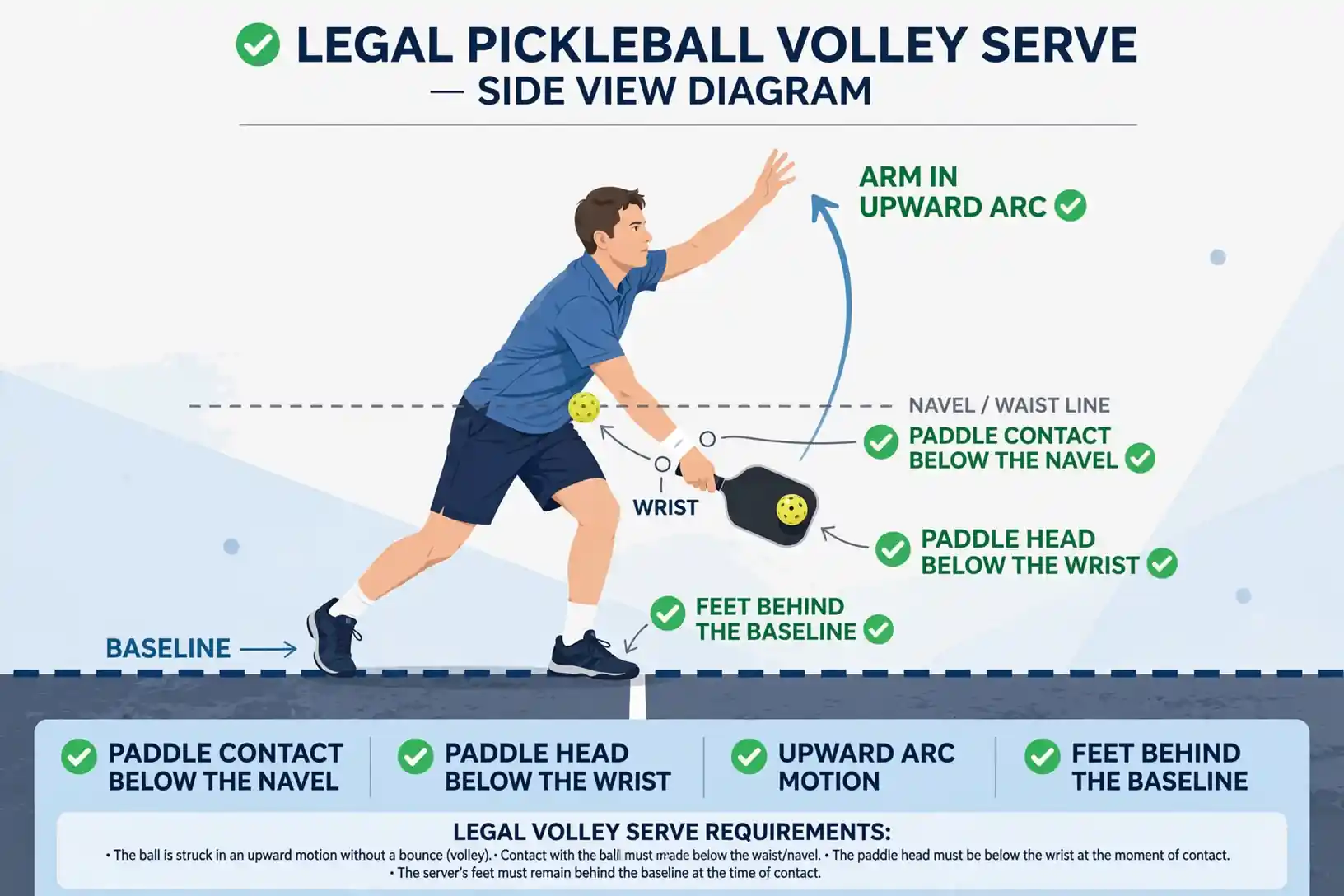
For the standard volley serve (hitting the ball before it bounces), USA Pickleball requires exactly three things at the moment of contact. Break any one and it is a fault:
- Upward arc. Your arm must be moving in an upward direction when the paddle strikes the ball. No overhand, no sidearm chop — the swing travels low to high.
- Contact below the waist. The paddle must strike the ball below your waist, which the rulebook defines as the navel (belly button). This is the rule beginners break most — what feels “low” is often navel-high or above.
- Paddle head below the wrist. The highest part of the paddle head must not be above the highest part of your wrist at contact. This stops players from snapping the paddle downward over the ball.
Memorize it as: up, below, below — upward swing, contact below the navel, paddle head below the wrist. Referees watch all three on every serve in tournament play.
The Volley Serve: Complete Checklist
Beyond the big three, the volley serve has positioning and procedure rules:
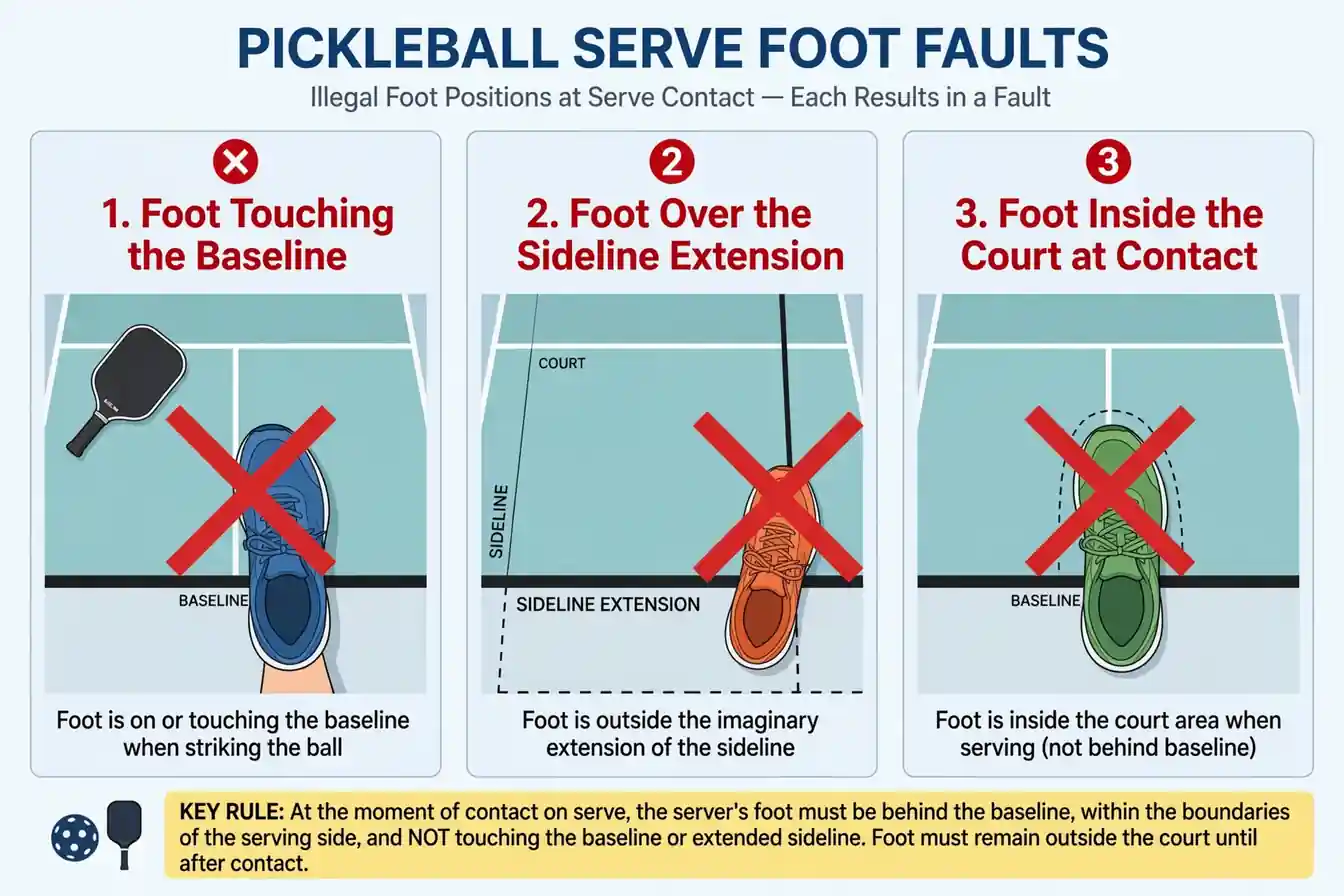
- Feet behind the baseline. At contact, at least one foot must be on the ground behind the baseline. Neither foot may touch the court, the baseline itself, or cross the imaginary extensions of the sideline or centerline. Touching the line is a foot fault.
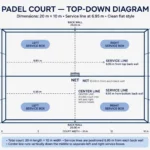
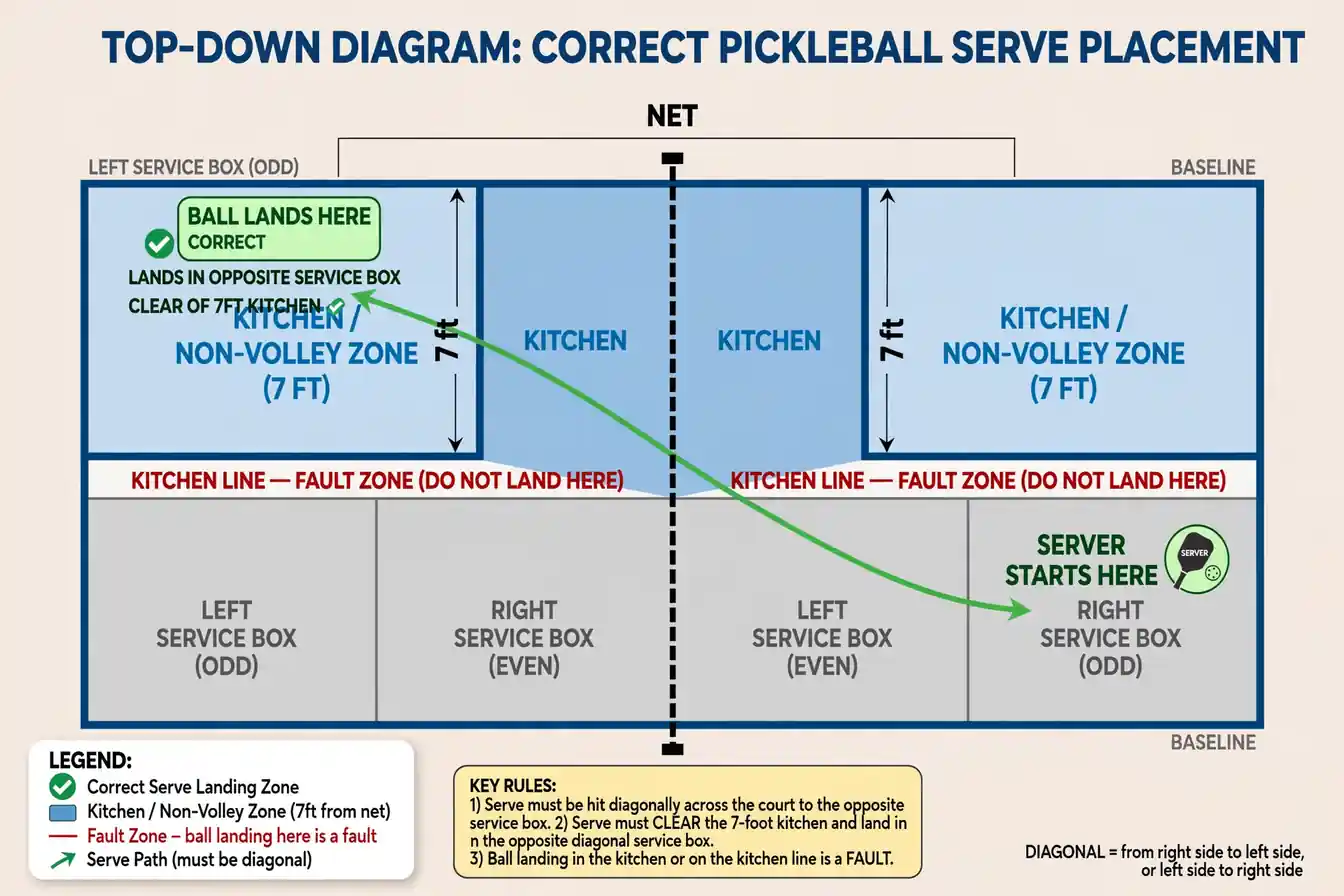
- Diagonal placement. The serve must travel crosscourt into the opposite service box — the box diagonally across the net.
- Clear the kitchen completely. The serve must land beyond the 7-foot non-volley zone. A serve landing on the kitchen line is a fault — on the serve, that line counts as “out.”
- One attempt. Exactly one serve attempt per turn. There is no second serve like tennis — unless the serve is a let (clips the net but still lands legally), which is replayed with no penalty.
- Call the score first. The server must call the score before serving. Since 2025, if you are not ready when the score is called, you can say “stop” or “wait” out loud and the server must hold.
- Release must be visible. The ball’s release must be visible to the receiver (and the referee, if there is one) — no hiding the ball or sneaky drops behind your body.
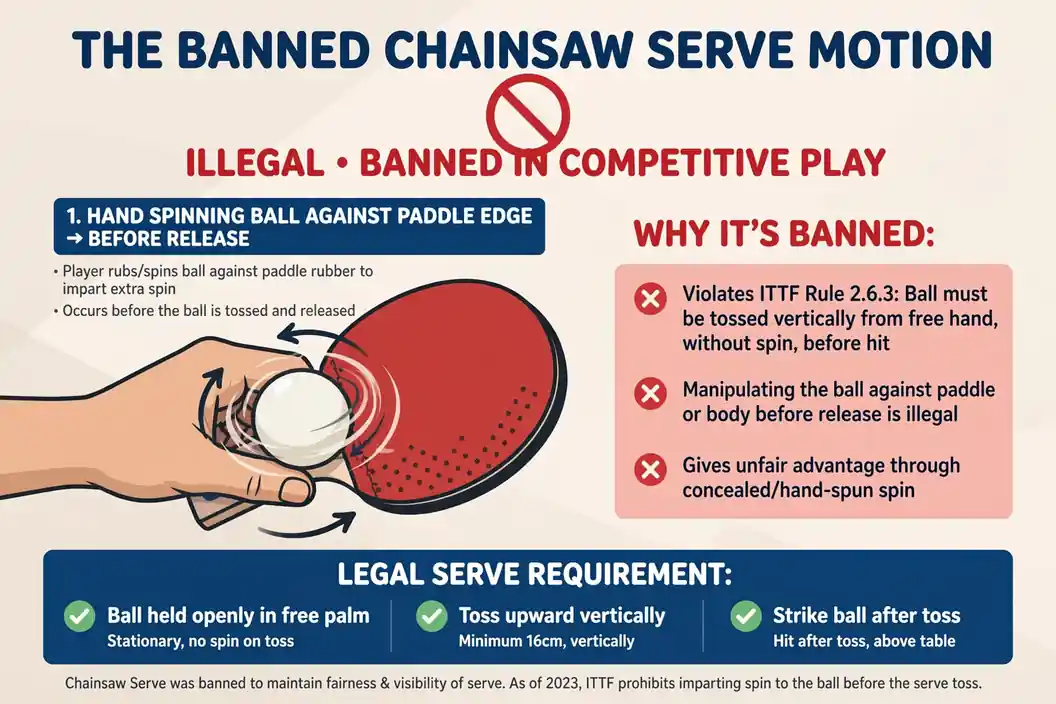
- No spin on the release. You may not use your hand or paddle to spin the ball as you release it. Spin created by the paddle at contact is perfectly legal — only pre-spin on the release is banned. (More on why below.)
The Drop Serve: The Beginner’s Best Friend
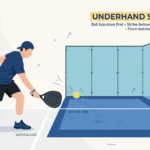
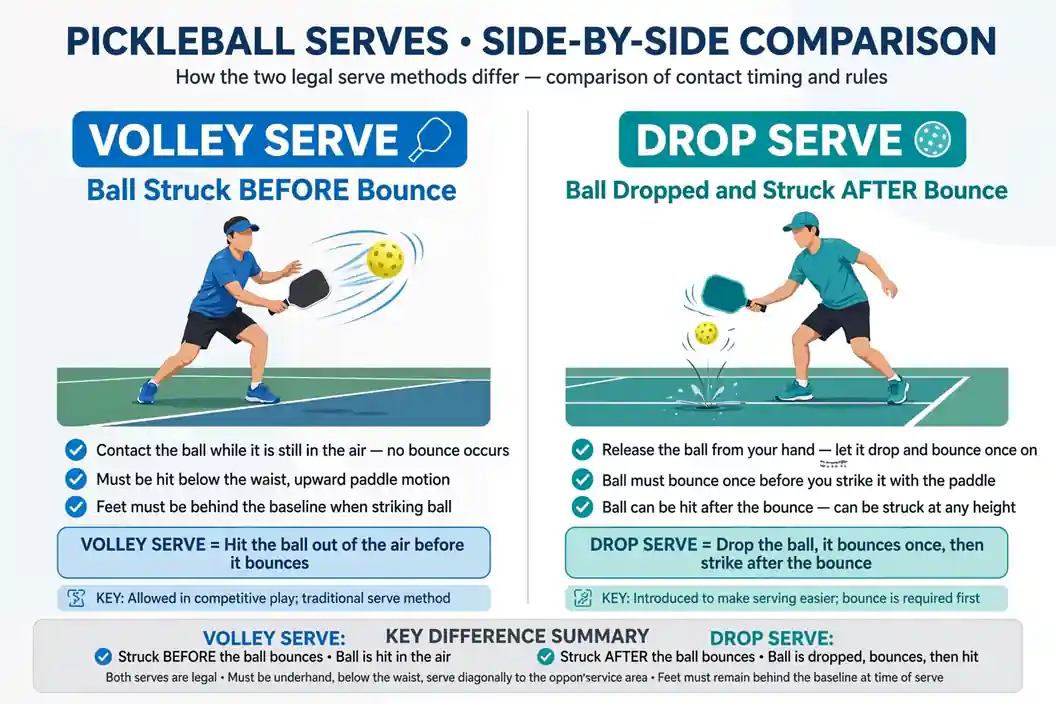
There is a second fully legal option: the drop serve. Instead of striking the ball out of the air, you drop it and hit it after it bounces. Here is the beautiful part — for the drop serve, the three non-negotiables do not apply. No upward-arc requirement, no below-the-waist rule, no paddle-below-wrist rule.
The drop serve’s own rules (2025 USA Pickleball):
- Gravity only. Drop the ball from any natural height — do not throw it down or toss it up. Since the 2025 update, you may also let the ball roll off your paddle face to start the drop, as long as it is gravity alone doing the work.
- Let it bounce. The ball must bounce at least once before you strike it (it may bounce more than once, anywhere on the playing surface).
- No added spin on the release. You may not deliberately spin the ball with your hand during the drop — though natural rotation from a clean release is fine.
- Same feet, same target. Foot-position rules and the diagonal-into-the-box requirement are identical to the volley serve.
Why beginners love it: the bounce gives your brain an extra half-second to time the swing, and without the height and arc restrictions, the motion feels like a normal groundstroke. Many coaches now teach the drop serve first. It is 100% legal in rec play and sanctioned tournaments.
Foot Faults: The Silent Point-Loser
Foot faults end rallies before they start, and players rarely feel them happening:
- Toe on the baseline at contact — fault. The line is part of the court; touching it means you are “in” the court.
- Foot over the imaginary sideline or centerline extension — fault, even though no line is painted there.
- Stepping in before contact — your feet must be legal at the moment the paddle hits the ball, not when you start your motion.
- Both feet in the air? At least one foot must be behind the baseline on the playing surface or the ground behind it at contact. Jumping into the serve is illegal.
Fix: practice serving with your toes a full shoe-length behind the baseline until the position is muscle memory.
Why Does This Rule Exist?
Pickleball’s serve rules all serve one philosophy, stated in the reasoning behind the spin-serve bans: the serve is meant to start the rally, not to win the point.
In tennis, the serve is a weapon — aces decide matches. The founders of pickleball wanted a game where the rally, not the serve, is the contest. Every restriction — underhand only, below the waist, no pre-spin, one attempt — exists to keep the serve as a neutral starting signal. The moment the serve becomes an offensive weapon, the rulebook steps in. Which brings us to the most famous intervention in the sport’s history.
The chainsaw serve saga. Around 2021, pro player Zane Navratil — already famous for pushing serve boundaries — popularized a technique where he used his paddle edge to roll the ball and load it with heavy pre-spin before striking it. The motion looked like pull-starting a chainsaw, hence the name. The ball kicked sideways off the bounce in ways returners could not read. It filtered down to rec play, where it was, in the Rules Committee’s words, “particularly devastating for amateur players.”
USA Pickleball banned the chainsaw serve effective January 1, 2022. Players adapted with a one-handed finger-spin version (pioneered by players like Morgan Evans) — so the committee banned all pre-release spin effective January 1, 2023, reasoning that “the original purpose of the serve was only to begin play,” that most players could neither master nor return a good spin serve, and that it gave a small number of players an unfair advantage. The PPA had already banned spin on the toss in 2022.
The lesson for beginners: when a serve technique feels like a cheat code, it probably is one — and the rulebook will catch up. Keep your serve simple, legal, and deep.
What-If Scenarios
My serve clips the net and lands in the correct box? Let — replay the serve, no penalty, no fault.
My serve clips the net and lands in the kitchen? Fault. A let only counts if the ball would otherwise be legal.
Can I bounce the ball before a volley serve? Yes — bouncing the ball (without hitting it) before your service motion is fine. Just do not strike it until your actual serve.
Can I switch between volley and drop serves mid-game? Yes. You may use either on any serve.
The receiver is not ready — can I quick-serve? No. The score must be called, and since 2025 the receiver can verbally call “stop” or “wait.” Quick-serving an unready opponent is a replay at minimum.
Can I serve with my paddle in my non-dominant hand? Yes — nothing in the rules requires a particular hand.
What if the ball hits the net post on a serve? The net post is a permanent object — if the serve hits it, the serve is a fault.
Case Studies: Real Matches, Real Rules
The serve that changed the rulebook. Zane Navratil’s chainsaw serve is the only serve in pickleball history to force two separate rulebook bans. First came the 2022 ban on the paddle-roll chainsaw motion; when Navratil switched to spinning the ball off his fingers, and Morgan Evans refined the one-handed version, USA Pickleball banned all pre-release spin from January 1, 2023. Navratil later walked through the whole evolution publicly, noting the rules “literally had to change because of him.” For beginners, the takeaway is simple: the line between innovation and illegality in serving is drawn at the release — spin the ball with your paddle at contact all you want; spin it before contact and you are breaking the rules.
The release you cannot see. The 2024 rule refinements added a requirement that the ball’s release be visible to the receiver and referee — a direct descendant of the chainsaw era, when players hid pre-spin behind their bodies. In refereed play today, an obscured release can be faulted even if the resulting serve looks clean. In rec play, the practical version: hold the ball up where your opponent can see it. Transparency is part of the serve.
FAQ
Can you serve overhand in pickleball? No. The upward-arc, below-waist, paddle-below-wrist requirements make an overhand serve impossible to execute legally.
Is the drop serve legal in tournaments? Yes — fully legal in both rec play and sanctioned tournaments.
How many serve attempts do I get? One. Only a let (netted but legally landing) earns a replay.
Can I put spin on my serve? With your paddle at contact — yes, as much as you like. With your hand on the release — no, that has been banned since 2023.
Does my serve have to land deep? It must land in the diagonal service box past the kitchen. Deep (near the baseline) is strategy, not a rule — but it is the best strategy, because it keeps the returner back.
What is a “let” serve? A serve that touches the net but still lands legally in the correct service box. It is replayed with no penalty.
Can the server’s partner do anything during the serve? Yes — the partner just needs to be on the correct side. Only the server’s feet and motion are regulated.
Key Takeaways
- Volley serve = upward arc, contact below the navel, paddle head below the wrist — break one, lose the rally.
- Drop serve = drop it, let it bounce, hit it — the big-three restrictions do not apply.
- Feet: at least one behind the baseline at contact; the lines (and their imaginary extensions) are lava.
- Serve diagonally, clear the kitchen entirely — the kitchen line is a fault on serves.
- One attempt per serve; lets are replayed.
- No pre-spin on the release, ever — the chainsaw saga is why.
- The serve starts the rally; it is not supposed to end it.
Keep Reading
Keep Reading